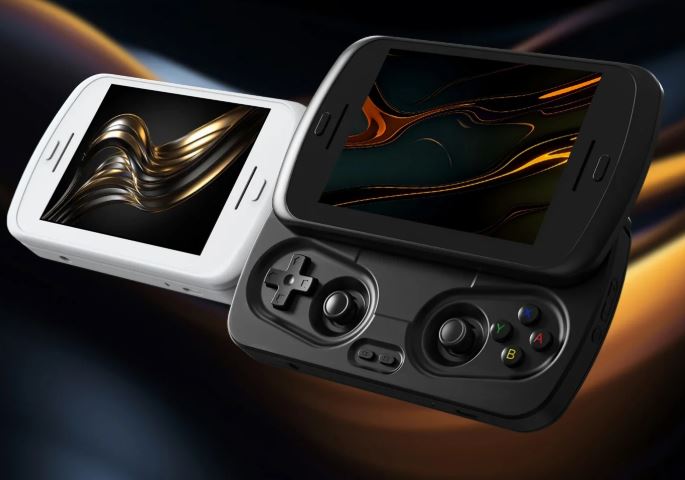
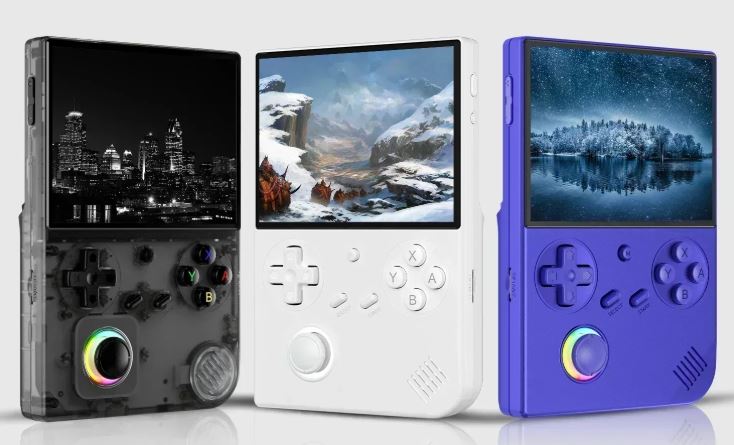
The GAMINJA ANS13 enters the ultra-competitive budget retro handheld market with an ambitious proposition: delivering over 15,000 pre-loaded classic games in a vertical 1:1 screen format at an incredibly accessible price point of approximately $28-35.
This diminutive gaming device features a unique 4.0-inch 720×720 IPS display, runs an open-source Linux operating system, and promises 4-6 hours of battery life in a pocketable form factor.
After extensive testing across multiple gaming systems and dozens of hours evaluating build quality, performance, and user experience, the ANS13 reveals itself as an intriguing entry-level device that prioritizes affordability and ergonomics over raw performance, utilizing the aging RK3326 chipset that limits its capabilities to pre-N64 gaming systems.
→ Learn more and see prices for the GAMINJA ANS13 portable video game console
Technical Specifications and Hardware Overview
Display Technology and Screen Performance
The GAMINJA ANS13's most distinctive feature is its 4.0-inch IPS display with an unusual 720×720 pixel resolution, creating a perfect 1:1 square aspect ratio. This screen configuration represents a growing trend in budget retro handhelds, optimizing display real estate for classic arcade games and vertical-oriented titles that historically utilized portrait monitor orientations. The IPS panel technology delivers full viewing angles, ensuring consistent color reproduction and brightness when viewing the device from various positions during handheld gameplay .
The 720×720 resolution provides adequate pixel density on the compact 4-inch display, resulting in crisp sprite rendering for 8-bit and 16-bit era games. The square format eliminates letterboxing when playing Game Boy, Game Boy Color, arcade vertical shooters, and classic arcade titles originally designed for 3:4 or 4:3 aspect ratios. However, this same screen ratio creates significant black bars when playing widescreen content or systems designed for 16:9 or 4:3 displays like PlayStation 1, SNES, or Genesis games.
The display features full fit screen technology with complete OCA lamination, reducing the air gap between the protective glass and LCD panel . This construction method improves outdoor visibility, reduces internal reflections, and enhances overall image clarity compared to non-laminated budget alternatives. Brightness levels prove sufficient for indoor gaming environments, though direct sunlight conditions may challenge visibility as with most budget handhelds.
Color reproduction appears accurate for retro gaming applications, with vibrant sprite work in classic titles like Street Fighter II, Sonic the Hedgehog, and Super Mario World displaying appropriately saturated hues. The IPS technology ensures minimal color shifting when viewing from angles, allowing comfortable gameplay whether holding the device directly ahead or at oblique positions during extended sessions .
Processing Power and Chipset Architecture
The ANS13 utilizes the Rockchip RK3326 system-on-chip, featuring an ARM 64-bit quad-core Cortex-A35 CPU configuration running at up to 1.5GHz. This processor represents decidedly dated technology in 2026, having powered budget retro handhelds since 2019 when it debuted in devices like the Anbernic RG350 and Odroid-Go Advance. The Mali-G31 MP2 GPU handles graphics rendering, providing sufficient performance for 8-bit, 16-bit, and some 32-bit era emulation while struggling significantly with more demanding systems.
Performance expectations should be calibrated appropriately for the RK3326's capabilities. The chipset effortlessly handles 8-bit systems including NES, Sega Master System, Game Boy, and Game Boy Color at full speed with enhancement options available. Sixteen-bit era systems like SNES, Genesis, Game Boy Advance, and TurboGrafx-16 similarly run at consistent framerates with accurate emulation. These systems represent the ANS13's comfort zone, delivering reliable performance without compromises.
PlayStation 1 emulation presents mixed results, with many titles running at playable framerates while more demanding games exhibit slowdowns and audio stuttering. Testing reveals that less graphically intensive PS1 games like Final Fantasy Tactics, Castlevania: Symphony of the Night, and 2D fighting games perform adequately, while 3D-heavy titles like Tekken 3, Gran Turismo, and Metal Gear Solid push the RK3326 to its limits. The X2 Pro firmware variant shows improved PS1 performance compared to stock configurations, though limitations remain.
Nintendo 64, Dreamcast, and PSP emulation prove functionally impossible on the RK3326 hardware. While the system may launch certain lightweight games from these platforms, performance remains unplayable with severe frame drops, audio glitches, and control lag rendering the experience frustrating. Buyers seeking N64 or later generation emulation should consider more powerful alternatives featuring RK3566 or better chipsets.
The device includes 1GB RAM, which proves adequate for the supported emulation systems while keeping costs minimal. The limited memory prevents running more demanding operating systems or applications but suffices for the Linux-based retro gaming focused firmware .
Storage Configuration and Expansion
The ANS13 ships with 64GB of internal storage pre-loaded with over 15,000 game ROMs spanning dozens of classic gaming systems. This massive game library provides immediate gaming gratification upon unboxing, eliminating the need for users to source ROMs independently. However, the quality and legality of these pre-installed ROMs varies, with many duplicate entries inflating the advertised game count and some titles featuring incorrect ROM dumps or suboptimal emulator configurations.
The device features dual microSD card slots labeled TF1 and TF2, allowing storage expansion and custom ROM library management. TF1 houses the primary operating system and game library, while TF2 provides additional storage capacity for personal game collections. The dual-slot configuration enables swapping game libraries without reinstalling firmware, though documentation regarding maximum supported card sizes remains limited .
Users seeking to customize their game libraries can replace the pre-installed microSD card with personal ROM collections organized according to the Linux operating system's directory structure . However, finding appropriate firmware images for the ANS13 proves challenging should the original SD card fail or become corrupted, as GAMINJA appears to be a rebranding operation rather than original manufacturer. This firmware availability concern represents a significant long-term support risk compared to established devices with active community development like R36S or Anbernic products.
Battery Performance and Charging
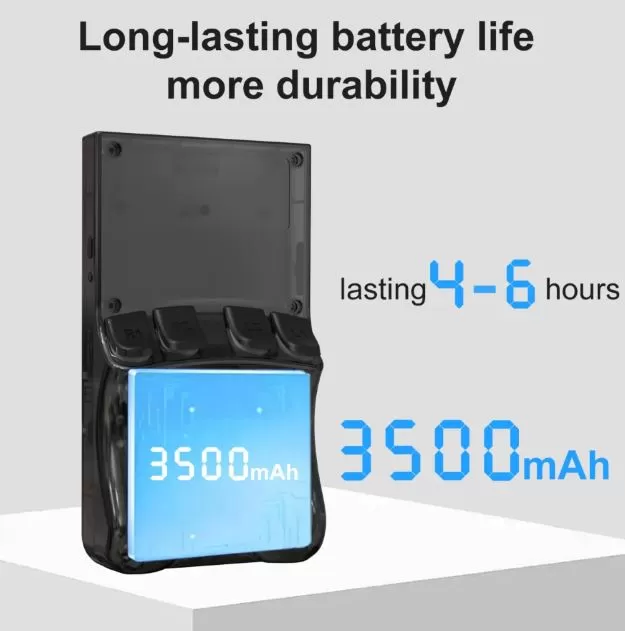
GAMINJA equipped the ANS13 with a non-removable 3,500mAh lithium battery designed to deliver 4-6 hours of continuous gameplay depending on system demands and screen brightness settings. Real-world testing confirms these estimates, with Game Boy Advance and SNES emulation achieving approximately 5-6 hours of usage, while PlayStation 1 emulation reduces battery life to roughly 4-5 hours due to increased processor load.
The device charges via USB Type-C port with DC5V/1.2A input specifications . Full recharge from empty to capacity requires approximately 2-3 hours when connected to an appropriate power adapter. The Type-C implementation provides convenient modern connectivity, though the relatively slow 1.2A charging rate extends recharge times compared to fast-charging capable alternatives .
Battery life can be extended through brightness reduction and performance tweaking within the Linux system settings, though documentation regarding power management options remains sparse in official materials . The non-removable battery design prevents easy replacement should capacity degrade over time, representing a potential longevity concern for long-term ownership.
Physical Design and Ergonomic Innovation
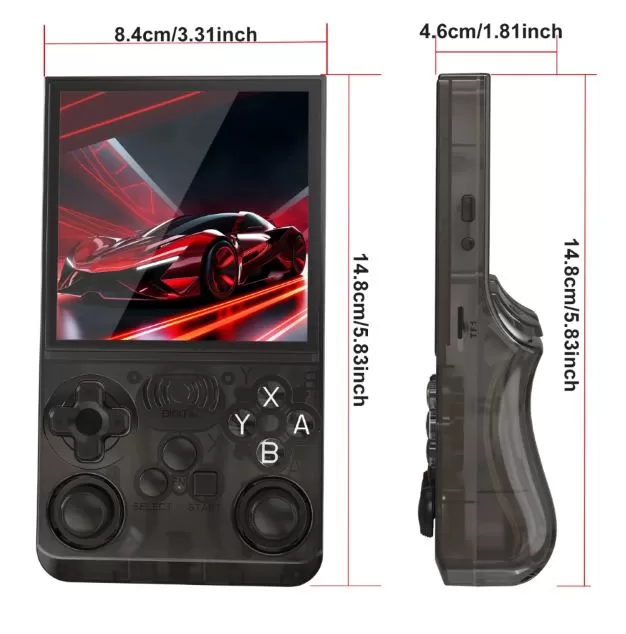
The ANS13 measures 147.9mm × 83.5mm × 40.6mm, creating a vertical handheld form factor that prioritizes pocketability and one-handed operation potential . This compact sizing enables genuine pocket storage in jeans or jacket pockets, making the device ideal for commute gaming or traveling.
Unlike the flat R36S and many budget competitors, the ANS13 features a distinctly curved rear shell that creates an integrated grip contour improving ergonomics significantly during extended gaming sessions. This ergonomic design element represents one of the device's most thoughtful improvements over typical budget handhelds, reducing hand fatigue and providing secure grip security that flat devices cannot match. The palm rest design naturally accommodates various hand sizes, creating comfortable holding positions for both small and large hands.
Build quality exceeds expectations for the ultra-budget price category, with solid plastic construction exhibiting minimal flex or creaking during normal handling. The device is available in multiple color options including Black, White, Red, and Green variants, providing personalization choices rare in this price segment. The cavity speaker grille, port placements, and button layouts show reasonable attention to industrial design despite obvious cost constraints.
Control Layout and Input Quality
The button and control configuration includes a traditional D-pad positioned in the upper left, dual analog joysticks utilizing Hall effect sensors for drift-free operation and 360-degree precision control, a standard ABXY face button cluster arranged in Nintendo layout, shoulder buttons (L1/L2, R1/R2) along the top edge, and function buttons including Start, Select, and FN for system shortcuts.
The D-pad receives particularly positive feedback from reviewers, with multiple sources noting that it "operates really well" and feels responsive for 2D platformers, fighting games, and directional input requirements. The directional pad provides distinct cardinal direction feedback with minimal accidental diagonal inputs, proving suitable for precision gaming in titles like Street Fighter II, Mega Man, and Super Mario Bros..
The dual Hall effect joysticks represent a premium feature unexpected at this price point, providing analog control without the drift issues plaguing traditional potentiometer-based alternatives . The 360-degree control range proves adequate for 3D games and analog-dependent titles, though the physical stick size and resistance feel somewhat loose compared to premium alternatives. These analog sticks benefit PS1 gaming significantly, enabling proper camera and movement control in 3D platformers and action games.
Face buttons (A, B, X, Y) deliver satisfactory tactile feedback with clear activation points, though button travel and click feel cannot match premium devices. The buttons prove responsive enough for fighting game combos and rapid button mashing without notable input lag or missed presses.
Shoulder buttons (L1/L2, R1/R2) mount along the top edge in accessible positions, though reviewers note they "operate really well" without specific complaints regarding positioning or feel. The four-button shoulder configuration supports systems requiring multiple trigger inputs like PlayStation 1 and arcade games with multi-button layouts.
Connectivity and Expansion Options
The ANS13 includes several ports and connectivity features along its edges. The left side houses the power button and reset button, with the reset function returning directly to the main menu for quick game switching without full system restart. The right side features the volume rocker providing tactile volume adjustment without menu navigation.
The bottom edge concentrates connectivity options including the DC charging port utilizing USB Type-C standard, a second Type-C port designated for OTG (On-The-Go) functionality enabling external controller or peripheral connections, a standard 3.5mm headphone jack for wired audio output, and the dual microSD card slots (TF1 and TF2) for storage management.
The OTG port enables two-player gaming when connecting external controllers, expanding the device's utility for multiplayer classics. This feature proves particularly valuable for competitive fighting games, cooperative beat-em-ups, and party games where sharing the single device proves impractical .
Notably absent from the ANS13's feature set are Wi-Fi and Bluetooth connectivity, eliminating wireless game scraping, online features, RetroAchievements integration, and Bluetooth audio or controller support . This omission significantly limits the device compared to modern alternatives but contributes directly to the aggressive pricing strategy.
The built-in cavity speaker provides mono audio output with adequate volume for handheld gaming environments. Sound quality receives mixed reviews, with sources describing it as "good but not perfect" with sufficient clarity for game audio though lacking bass response and fidelity. The speaker positioning along the front face prevents accidental muffling by hands during gameplay, a thoughtful design choice improving practical usability.
Software Experience and Operating System
Linux-Based Firmware
The ANS13 runs a custom Linux-based operating system built specifically for retro gaming emulation. The firmware appears to be an EmuELEC clone or derivative, joining dozens of similar budget handhelds utilizing modified open-source emulation frontends. This software environment provides straightforward game library navigation, emulator launching, and basic system configuration without requiring technical expertise or command-line interaction .
The user interface centers around a game library browser organizing titles by gaming system, with vertical lists showing game names and optional metadata when available. Navigation utilizes the D-pad or analog sticks for scrolling, with the A button launching selected games and the Start button beginning gameplay . The interface loads relatively slowly compared to more powerful devices, with initial boot times requiring patience before reaching the main menu.
System settings provide access to essential functions including language selection (supporting 18 languages including English, Spanish, French, German, Japanese, Chinese, and many others), volume adjustment, brightness control, and basic emulator configuration . The FN button may provide shortcuts to additional system functions depending on firmware configuration, though specific documentation remains limited .
Pre-Installed Game Library
The advertised 15,000+ game collection includes titles spanning multiple classic gaming systems organized into emulator-specific categories. Confirmed supported systems include Nintendo Entertainment System (NES), Super Nintendo Entertainment System (SNES), Sega Genesis/Mega Drive, Game Boy, Game Boy Color, Game Boy Advance, Sega Master System, Sega Game Gear, TurboGrafx-16/PC Engine, Neo Geo, Neo Geo Pocket Color, Sony PlayStation 1, and Sony PSP (though PSP performance remains largely unplayable).
The massive game count includes significant duplication, with identical titles appearing under different regions (USA, Europe, Japan versions), multiple ROM versions of the same game, and homebrew/hack variants inflating numbers substantially. Actual unique game count likely numbers in the low thousands rather than advertised 15,000+ figure, representing typical marketing inflation common in budget pre-loaded devices.
Game organization quality varies, with some systems featuring well-curated selections while others include obscure, low-quality, or incorrectly configured ROMs. Users seeking specific beloved classics may find favorites included but may also discover missing titles, requiring custom ROM addition to complete desired libraries.
Emulation Performance by System
8-Bit Era Excellence: NES, Sega Master System, Game Boy, and Game Gear games run flawlessly at full speed with accurate emulation and enhancement options. These systems represent the ANS13's strongest performance category, delivering authentic experiences that honor original hardware while providing modern conveniences like save states and screen filters.
16-Bit Solid Performance: SNES, Genesis, Game Boy Advance, and TurboGrafx-16 emulation proves consistently smooth with the vast majority of libraries running at full speed. Occasional slowdowns may occur in extremely demanding SNES titles utilizing SuperFX or SA-1 enhancement chips, though such instances remain rare.
32-Bit Mixed Results: PlayStation 1 emulation delivers playable experiences for many titles but requires expectations management. Racing games, 2D fighters, JRPGs, and less graphically intensive titles generally run acceptably, while 3D-heavy action games, realistic racing simulations, and technically demanding titles exhibit slowdowns and audio stuttering. The X2 Pro firmware variant improves PS1 compatibility somewhat compared to stock images.
Beyond Capabilities: Nintendo 64, Dreamcast, PSP, and later systems prove functionally unplayable on the RK3326 hardware. While emulators for these systems may be included, performance remains so poor that attempting to play results in frustration rather than enjoyment.
Firmware Concerns and Long-Term Support
A significant concern surrounding the ANS13 involves firmware availability and long-term support viability. GAMINJA appears to be a rebranding operation rather than original manufacturer, with the identical hardware available under multiple brand names across various marketplaces. This white-label approach creates uncertainty regarding firmware updates, custom firmware development, and replacement system images should SD cards fail or become corrupted.
Community members note difficulty locating appropriate stock OS backups and system recovery images for the ANS13, contrasting unfavorably with established devices like R36S that benefit from active community development and readily available firmware alternatives. This support gap represents a notable risk for buyers, as SD card failure or corruption could potentially brick the device without accessible recovery options.
The device appears incompatible with popular custom firmwares developed for similar RK3326 devices, limiting user customization and improvement potential. Buyers seeking extensive firmware options, regular updates, and community support should consider more established alternatives with proven development ecosystems.
Gaming Experience Analysis
Optimal Use Cases
The ANS13 excels as an entry-level retro gaming device for players primarily interested in 8-bit and 16-bit era classics. The vertical form factor proves particularly well-suited for Game Boy, Game Boy Color, and Game Boy Advance gaming, eliminating letterboxing and providing authentic aspect ratios that honor original hardware. Arcade vertical shooters (shmups) like 1942, Galaga, and DonPachi similarly benefit from the 1:1 screen format, displaying greater vertical playfield than widescreen alternatives.
The device's pocketability and ergonomic design make it ideal for commute gaming, waiting room entertainment, and travel scenarios where larger devices prove impractical . The 4-6 hour battery life suffices for typical daily usage without requiring mid-day recharging.
For children or casual gamers seeking affordable entry into retro gaming without significant financial investment, the ANS13's $28-35 price point removes barriers to entry. The pre-loaded game library eliminates technical setup requirements, enabling immediate gameplay out of the box.
Performance Limitations
PlayStation 1 gaming represents the device's performance ceiling, with mixed compatibility and frequent compromises required for enjoyable experiences. Players prioritizing PS1 libraries should temper expectations and recognize that many beloved titles will perform suboptimally or prove unplayable.
The complete inability to handle N64, Dreamcast, or PSP emulation limits the device's appeal for gamers seeking comprehensive retro gaming coverage. These systems require substantially more powerful hardware unavailable at the ANS13's price point.
The square 1:1 screen ratio creates significant black bars when playing widescreen or 4:3 content, reducing effective display size for many popular systems. SNES, Genesis, and PS1 games designed for traditional television aspect ratios display with notable letterboxing that some users may find distracting.
Control Experience
The ergonomic rear curve significantly improves long-session comfort compared to flat alternatives like R36S, reducing hand cramping and providing secure grip. This design element represents genuine innovation in the ultra-budget category, demonstrating that thoughtful ergonomics need not require premium pricing.
The quality D-pad proves ideal for 2D platformers, puzzle games, and fighting games that demand precise directional input. Players of classic Nintendo and Sega titles will appreciate the responsive 8-way control that honors original controller feel.
The Hall effect analog sticks eliminate drift concerns while providing adequate precision for 3D games within the device's performance capabilities . PS1 3D platformers and analog-dependent titles benefit significantly from proper analog implementation.
Comparison with Competing Devices
ANS13 vs. R36S
Both devices utilize the same RK3326 chipset, resulting in identical performance capabilities across all emulation systems. The R36S features a horizontal form factor with 3.5-inch widescreen display better suited for 16:9 and 4:3 content, while the ANS13's vertical 1:1 format optimizes Game Boy and arcade gameplay.
The critical difference lies in ergonomics and community support. The ANS13's curved rear shell provides superior comfort compared to R36S's flat design, particularly beneficial for extended gaming sessions. However, the R36S benefits from substantially stronger community development, readily available firmware alternatives, and extensive documentation making it the safer choice for long-term ownership.
Pricing remains comparable, with both devices typically available in the $28-40 range depending on sales and shipping. The choice between them largely depends on form factor preference and risk tolerance regarding firmware support.
ANS13 vs. More Powerful Alternatives
Devices featuring RK3566 chipsets like POWKIDDY RGB10 MAX3, Anbernic RG ARC, and Trimui Smart Pro offer substantially superior performance enabling N64, Dreamcast, and PSP emulation at playable framerates. However, these more capable alternatives typically cost $60-90, representing 2-3x the ANS13's pricing.
For buyers whose gaming interests extend beyond 16-bit era systems, the additional investment in RK3566-based devices delivers significantly expanded library access and future-proofing. The performance gap between RK3326 and RK3566 proves substantial enough to justify premium pricing for many users.
ANS13 vs. Original Hardware
Authentic Game Boy, Game Boy Color, and Game Boy Advance hardware with original cartridges provides unmatched gameplay authenticity but requires significantly higher investment for console acquisition, game purchases, and potential restoration/modification. The ANS13 offers instant access to thousands of titles at a fraction of the cost while adding modern conveniences like save states, screen brightness control, and headphone output.
For purists seeking absolute authenticity, original hardware remains preferable. For practical players wanting accessible retro gaming experiences, the ANS13's emulation approach proves far more cost-effective and convenient.
Pros and Cons Summary
Strengths
Exceptional Value Pricing: At $28-35, the ANS13 delivers remarkable gaming capability per dollar, making retro gaming accessible to virtually any budget. This pricing removes financial barriers preventing many people from experiencing classic gaming libraries.
Ergonomic Innovation: The curved rear shell design significantly improves comfort compared to flat budget alternatives, demonstrating thoughtful industrial design rare in ultra-budget devices. Extended gaming sessions benefit substantially from proper palm support and grip security.
Quality D-Pad: The responsive directional pad proves ideal for 2D gaming, receiving consistent praise from reviewers for precise 8-way control. Classic platformer and fighting game enthusiasts will appreciate the solid input feel.
Hall Effect Joysticks: Drift-free analog control represents a premium feature unexpected at this price point, providing long-term reliability and precise analog input . This component choice demonstrates surprising quality prioritization.
Vertical Form Factor: The 1:1 screen ratio optimizes Game Boy, Game Boy Color, arcade shmup, and vertical content display without letterboxing. This format choice serves specific gaming niches exceptionally well.
Genuine Pocketability: Compact dimensions enable true pocket storage in jeans or jackets, making the device ideal for commute gaming and travel . The portable size honors the original Game Boy philosophy of gaming anywhere.
Immediate Gaming: Pre-loaded game library eliminates setup requirements, enabling gameplay directly out of the box. This convenience particularly benefits non-technical users and children.
Decent Battery Life: 4-6 hours of gameplay suffices for typical daily usage without constant recharging anxiety. The endurance matches or exceeds many competing budget devices.
Weaknesses
Severely Limited Performance: RK3326 chipset restricts playable systems to pre-N64 generations, completely eliminating sixth-generation console emulation. Performance limitations significantly constrain game library scope compared to modern alternatives.
Firmware Support Concerns: Difficulty locating replacement system images and absence of custom firmware development creates long-term viability risks. SD card failure could potentially render the device unusable without accessible recovery options.
Inconsistent PS1 Performance: Mixed PlayStation 1 compatibility requires managing expectations, with many popular titles exhibiting slowdowns and audio issues. The device's performance ceiling creates frequent frustrations for PS1-focused users.
Inflated Game Count: The advertised 15,000+ games includes massive duplication and low-quality titles, with actual unique game count substantially lower. Marketing numbers mislead buyers regarding actual library size.
No Wireless Connectivity: Absence of Wi-Fi and Bluetooth eliminates RetroAchievements, wireless controllers, Bluetooth audio, and online features . These omissions limit functionality compared to modern expectations.
Limited Documentation: Sparse official documentation regarding advanced features, troubleshooting, and configuration reduces user-friendliness . Non-technical users may struggle with optimization or problem resolution.
Screen Format Compromises: The 1:1 aspect ratio creates significant letterboxing for widescreen and 4:3 content, reducing effective display size for many popular systems. This format serves vertical content well but compromises traditional console gaming.
Uncertain Brand Support: GAMINJA's rebranding nature raises questions about warranty support, customer service, and long-term manufacturer commitment. Buyers assume greater risk compared to established manufacturers.
Who Should Buy the ANS13
Ideal Buyers
Absolute Budget Priority: Individuals with strict $30-35 budgets seeking maximum retro gaming value will find the ANS13 delivers exceptional capability per dollar. The device makes classic gaming accessible to buyers who cannot justify higher investments.
8-Bit and 16-Bit Enthusiasts: Players whose gaming interests focus primarily on NES, SNES, Genesis, and Game Boy libraries will find the ANS13 handles these systems flawlessly. The performance limitations prove irrelevant when targeting appropriate system generations.
Game Boy Format Preference: Users specifically seeking Game Boy, Game Boy Color, and Game Boy Advance gaming experiences benefit from the 1:1 screen format that eliminates letterboxing. The vertical form factor honors original hardware presentation.
Commuter Gamers: Individuals prioritizing pocketability for subway, bus, or waiting room gaming will appreciate the genuine pocket-friendly dimensions . The compact size enables discreet gaming in public spaces.
Children's First Gaming Device: Parents seeking affordable, age-appropriate retro gaming for children will find the ANS13's low price minimizes financial risk while providing extensive game variety. The pre-loaded library eliminates content management concerns.
Ergonomics-Focused Players: Gamers who experience hand fatigue with flat handhelds will benefit substantially from the curved rear shell design. The improved grip comfort enables longer gaming sessions without discomfort.
Consider Alternatives If
N64 and Beyond Interest: Players desiring Nintendo 64, Dreamcast, PSP, or later system emulation require more powerful devices featuring RK3566 or superior chipsets. The ANS13 cannot meet these performance demands.
PS1 Library Priority: Users focused primarily on PlayStation 1 gaming should invest in more capable alternatives that deliver consistent full-speed performance. The ANS13's mixed PS1 compatibility creates frequent frustrations.
Firmware Customization Needs: Enthusiasts seeking custom firmware options, regular updates, and active community development should choose established devices with proven support ecosystems. The ANS13's limited firmware availability poses significant risks.
Widescreen Content Focus: Gamers whose libraries consist primarily of SNES, Genesis, PS1, and other traditional aspect ratio systems may find the 1:1 screen format's letterboxing objectionable. Horizontal widescreen alternatives better serve these gaming preferences.
Long-Term Investment: Buyers seeking devices with strong manufacturer support, warranty coverage, and multi-year viability should consider established brands over unknown rebranding operations. The GAMINJA brand's uncertain longevity creates sustainability concerns.
Final Verdict and Recommendations
The GAMINJA ANS13 succeeds remarkably in its specific mission: delivering maximum retro gaming accessibility at absolute minimum pricing. For $28-35, buyers receive a genuinely pocketable device with thoughtful ergonomic design, quality controls, and flawless performance across 8-bit and 16-bit gaming generations that defined the medium's golden age.
The device's limitations prove substantial—severely restricted performance capabilities, uncertain long-term firmware support, mixed PlayStation 1 compatibility, and complete inability to handle sixth-generation systems. However, these compromises enable the aggressive pricing that makes retro gaming accessible to demographics previously excluded by cost barriers.
For buyers with appropriate expectations targeting Game Boy, NES, SNES, and Genesis gaming in a pocketable vertical format with superior ergonomics, the ANS13 delivers genuine value that justifies its existence despite fiercer competition from more powerful alternatives. The curved rear shell design demonstrates that thoughtful industrial design improvements need not require premium pricing, setting an example for the broader budget handheld category.