🕹️ Introduction: When Games Stopped Being Just Games
There are moments in gaming history that hit you like a truck — moments you remember exactly where you were, what you were sitting on, and whether you were alone or with friends when they happened. Not just good moments in good games, but watershed moments that split gaming history into a "before" and an "after."
These aren't necessarily the flashiest cutscenes or the most expensive productions. Some are mechanical revolutions. Some are emotional gut punches. Some are business decisions that accidentally changed culture forever. But all of them share one thing: the world of gaming was genuinely different after they happened.
Here are the 10 greatest gaming moments that changed everything.
🏆 The 10 Moments
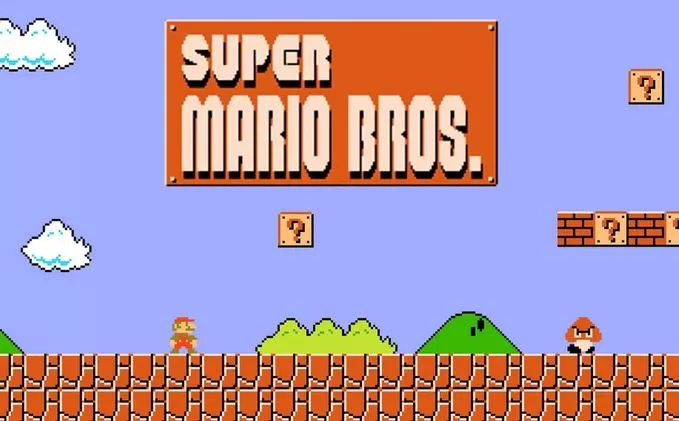
🔴 1. Super Mario Bros. Saves the Industry — 1985
The Game: Super Mario Bros. (Nintendo, NES)
The Moment: The entire game existing.
Before Super Mario Bros., the video game industry was in freefall. The crash of 1983 had devastated the market — retailers were selling Atari cartridges by the pound, consumer trust was gone, and most analysts thought home gaming was a fad that had finally run its course.
Then Nintendo released a small Italian plumber who jumped on mushrooms, and everything changed.
Super Mario Bros. didn't just sell consoles — it rebuilt the entire concept of what a home video game could be: tight controls, progressive difficulty, hidden secrets, a world you wanted to explore just to see what came next. It established platform game design principles that are still in use today, and proved that games could be a reliable, quality-controlled entertainment medium.
💡 Without Super Mario Bros., there may have been no PlayStation, no Xbox, no gaming industry as we know it. That's not hyperbole — that's economic history.
🔵 2. Super Mario 64 Invents 3D Gaming — 1996
The Game: Super Mario 64 (Nintendo 64)
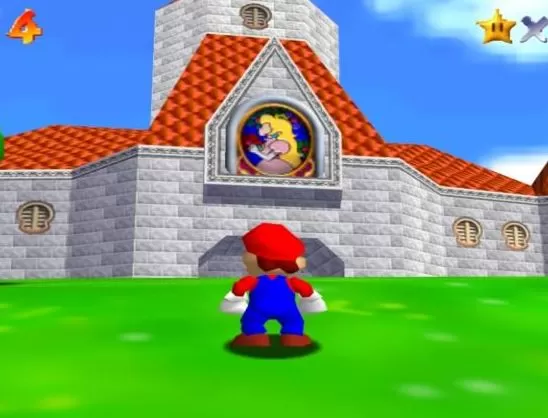
The Moment: Stepping through the painting into Bob-omb Battlefield for the first time.
In 1996, moving through a fully realized 3D world in real time was not just impressive — it was genuinely mind-bending. Super Mario 64 solved problems that the entire industry hadn't figured out yet: how to control a character in three-dimensional space, how to implement a useful camera, how to design levels that rewarded exploration rather than just forward movement.
Industry veterans still talk about it in reverent terms. According to developers interviewed by Retro Gamer magazine, "Nintendo saved us probably five years of failed experiments and clunky controls" by solving third-person 3D movement so elegantly. The analog stick, the dynamic camera, the open hub world — Mario 64 handed these blueprints to the entire industry.
Every 3D game you've ever played carries its DNA.
💡 Banjo-Kazooie, Crash Bandicoot, Spyro, Jak and Daxter — all children of Mario 64.
💛 3. The Death of Aerith — Final Fantasy VII, 1997
The Game: Final Fantasy VII (Square, PlayStation)
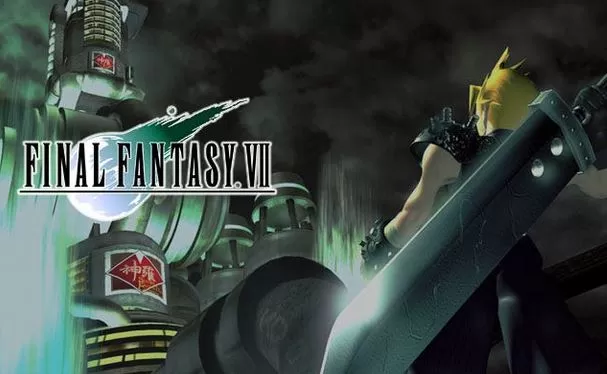
The Moment: Sephiroth descends. The screen fades. She doesn't get up.
Before Final Fantasy VII, video games had an unspoken contract with the player: important characters don't die permanently. Maybe they got knocked out. Maybe they were kidnapped. But the party member you'd been leveling up for 20 hours? Untouchable.
Square broke that contract in cold blood — and storytelling in games was never the same.
Aerith Gainsborough's death was shocking not just because it happened, but because of how it was designed: no dramatic last words, no chance to save her, no game over screen. She simply fell. Cloud caught her. And that was that. Players around the world sat in silence, some reportedly rebooting their PlayStations thinking it was a bug.
The impact echoes everywhere: The Last of Us, God of War, Red Dead Redemption 2 — every game that has used permanent character death as a narrative weapon owes a debt to Aerith. Even Wreck-It Ralph acknowledged it with an "Aerith lives" graffiti Easter egg.
💡 "This is why I think Aerith's death is more impactful than Dumbledore's death in Harry Potter — it set the standard for unexpected deaths that feel personal." — Scholar quoted by The Japan Times
🟢 4. GTA III Creates the Open World — 2001
The Game: Grand Theft Auto III (Rockstar, PlayStation 2)
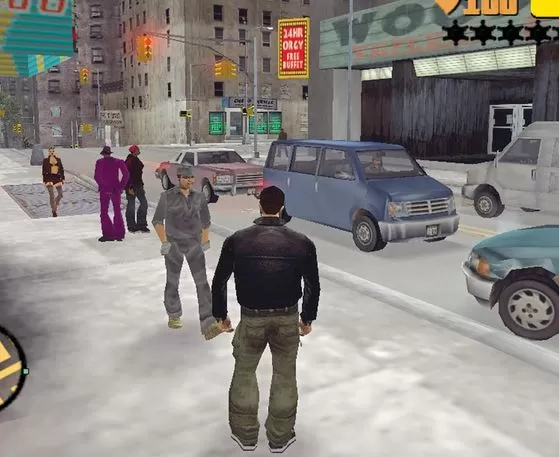
The Moment: Arriving in Liberty City and realizing there are no invisible walls.
Open-world games existed before GTA III, but they were essentially open corridors — big but hollow, structured around a central path. In 2001, Rockstar dropped players into a fully realized 3D city and simply said: do whatever you want.
You could follow the missions. You could steal a police car and drive it off a bridge. You could ignore everything and just walk around. Liberty City wasn't a backdrop — it was a sandbox with its own logic, its own rhythm, its own random chaos. The concept of "emergent gameplay" — things happening that developers never scripted — became a mainstream idea overnight.
Without GTA III there is no Skyrim, no Red Dead Redemption, no Spider-Man, no Elden Ring in its current form.
🟠 5. Halo: Combat Evolved Proves Consoles Can Do FPS — 2001
The Game: Halo: Combat Evolved (Bungie / Xbox)
The Moment: The first landing on Installation 04 — stepping out of the dropship and seeing the ring stretching across the sky.
For years, first-person shooters were a PC-only genre. The assumption was absolute: mouse and keyboard were required for precision aiming, and console controllers simply couldn't compete. GoldenEye on N64 had shown promise, but Halo: Combat Evolved demolished the argument entirely.
Bungie reinvented FPS controls from the ground up for analog sticks — introducing two-weapon carrying limits that created tactical decisions, regenerating shields that replaced health packs and changed pacing, and vehicle combat that no console FPS had pulled off at that scale. The result was a campaign and multiplayer experience that could stand proudly next to anything on PC.
Halo didn't just sell Xboxes — it legitimized console gaming as a premium FPS platform, paving the way for every Call of Duty, Battlefield, and Destiny that followed.
💡 The LAN multiplayer nights Halo inspired in the early 2000s were the proto-esports events of a generation.
⚫ 6. "Would You Kindly?" — BioShock, 2007
The Game: BioShock (Irrational Games, Xbox 360 / PC)
The Moment: The mid-game reveal that recontextualizes everything you've done.
⚠️ Mild spoilers ahead.
BioShock's infamous twist isn't just the greatest plot reveal in gaming history — it's a philosophical statement about the nature of the medium itself. When the phrase "Would you kindly?" is explained, players suddenly realize that the game has been commenting on player agency and obedience the entire time.
You thought you were making choices. You weren't. And the game made you feel it.
This moment elevated games to literary territory previously reserved for novels and film. It proved that the interactive nature of games — the very thing that makes them different from other media — could be weaponized as a narrative tool. Games journalists and academics still cite it as the moment that definitively proved video games could be art.
🟡 7. The Last of Us Delivers a Masterclass in Storytelling — 2013
The Game: The Last of Us (Naughty Dog, PlayStation 3)
The Moment: The opening 15 minutes. No spoilers needed — you know.
Building on the foundations laid by games like Final Fantasy VII and BioShock, The Last of Us in 2013 represented the culmination of a decade's worth of progress in narrative game design. Its opening sequence — deliberately paced, emotionally devastating, and told almost entirely through gameplay rather than cutscenes — set a new benchmark that the entire industry immediately began chasing.
The game proved that a mainstream action game could carry the emotional weight of prestige television drama. It didn't just attract existing gamers — it convinced millions of people who had never considered playing games that this medium was worth their time.
💡 The Last of Us TV adaptation (2023) became one of HBO's most-watched series ever — a direct consequence of the game's storytelling reputation.
🔶 8. Minecraft Redefines What a Game Is — 2011
The Game: Minecraft (Mojang)
The Moment: Realizing there are no objectives. You just... build.
When Minecraft became a cultural phenomenon, it shattered several assumptions simultaneously: that games needed clear win conditions, that graphics mattered more than possibility, that children needed to be guided rather than given tools.
Minecraft didn't just create a genre (survival crafting) — it pioneered user-generated content as the core product, prefiguring Roblox, Fortnite Creative, and the entire concept of games-as-platforms. It became the best-selling video game of all time (over 300 million copies across all platforms) not by being the most polished, but by being the most open.
Teachers use it in classrooms. Architects use it to prototype buildings. Musicians have built working computers inside it. No one predicted any of this.
🟣 9. Fortnite's "The End" Event — 2019
The Game: Fortnite (Epic Games)
The Moment: Season X ends with a black hole that swallows the entire game map. For 36+ hours, the game is completely unplayable — replaced only by a black hole on screen.
Epic Games did something that had never been done at this scale: they deleted their own game as a live event watched by millions simultaneously. No content, no menus, just a black hole. The internet collectively lost its mind.
"The End" wasn't just a marketing stunt (though it was that too). It was the moment the gaming industry internalized the power of live events as shared cultural experiences — the equivalent of a Super Bowl halftime show, but interactive and global. Every live event in gaming since — from Warzone updates to Destiny raids — traces a direct line back to that black hole.
💡 At its peak, over 7 million players watched the event live in-game, with millions more on Twitch and YouTube.
🔴 10. The Legend of Zelda: Breath of the Wild Reinvents Open World Design — 2017
The Game: The Legend of Zelda: Breath of the Wild (Nintendo, Switch)
The Moment: Climbing the first hill outside the Great Plateau and seeing the entire world laid out below you — everything accessible, nothing locked.
Games had been doing open worlds for 16 years by 2017. But Breath of the Wild asked a question nobody had fully answered: what if the entire world was one big physics sandbox where everything interacted with everything else?
You could cut down trees to build bridges. Use a metal shield as a magnet. Cook food mid-battle. Light grass on fire to create thermal updrafts and glide over mountains. Exploit enemy weapon logic in ways developers hadn't intended. The game said yes to almost everything, and the industry — from Elden Ring to Genshin Impact — immediately started taking notes.
Breath of the Wild didn't just make a great open world. It made every open world that came before it feel claustrophobic by comparison.
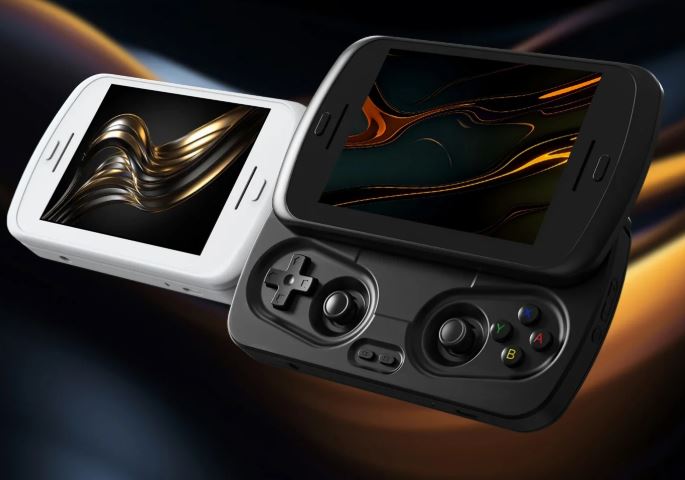
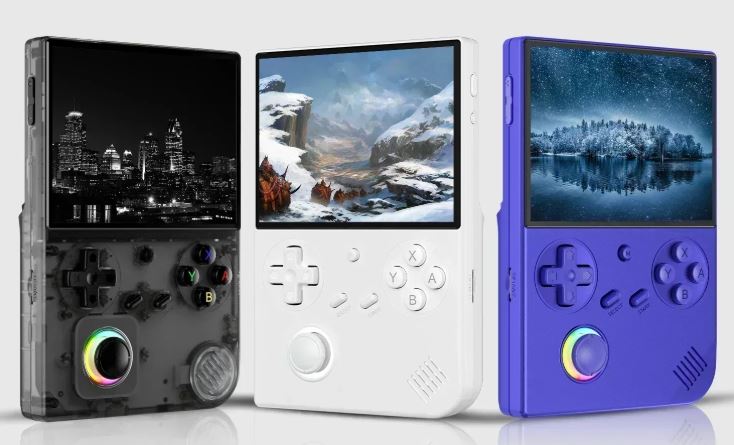
🎮 Retro Consoles with which I can play these 10 wonderful Games and which are essential for PS1, N64, PS2 and classic systems
🟢 Level 1 — Budget (€20–€35) → NES, SNES, GB, GBA, PS1
Perfect for 8/16-bit systems and PS1. Not powerful enough for N64 or PS2.
| Console | Approx. Price | Emulates Well |
|---|---|---|
| R36S / R36H (Boyhom) - Check availability | ~€28–35 | NES, SNES, GBA, GBC, PS1, Mega Drive |
| Miyoo Mini Plus - Check availability | ~€30–40 | NES, SNES, GBA, GBC, PS1 — best for 2D classics |
| PowKiddy V10 - Check availability | ~€25–35 | NES, SNES, GBA, PS1, Mega Drive |
| Bitmolab GameBaby - Check availability | ~€25 | NES, SNES, GBA — Game Boy form factor |
🟡 Level 2 — Mid-Range (€40–€90) → PS1, N64, some PS2
The sweet spot for price vs. performance. Smooth N64, partial PS2 on easier titles.
| Console | Approx. Price | Emulates Well |
|---|---|---|
| Anbernic RG40XX H - Check availability | ~€55–65 | PS1 ✅ N64 ✅ PS2 ⚠️ partial |
| Anbernic RG40XX V - Check availability | ~€50–60 | PS1 ✅ N64 ✅ GBA, SNES |
| Trimui Smart Pro - Check availability | ~€45–55 | PS1 ✅ N64 ✅ SNES, GBA |
| Miyoo Flip V2 - Check availability | ~€70 | PS1 ✅ N64 ✅ foldable DS-style design |
| Anbernic RG35XX Plus - Check availability | ~€45 | PS1 ✅ N64 ⚠️ partial |
🔴 Level 3 — High-End (€90–€250) → Full PS2, PSP, GameCube, Wii
For smooth PS2 emulation you need this tier.
| Console | Approx. Price | Emulates Well |
|---|
| Console | Approx. Price | Emulates Well |
|---|---|---|
| Anbernic RG406V - Check availability | ~€140–160 | PS2 ✅ PSP ✅ N64 ✅ GameCube ⚠️ |
| Anbernic RG505 - Check availability | ~€120–140 | PS2 ✅ PSP ✅ N64 ✅ |
| Retroid Pocket 5 - Check availability | ~€200–230 | PS2 ✅ GameCube ✅ Wii ✅ Android |
| Retroid Pocket Mini - Check availability | ~€130–150 | PS2 ✅ PSP ✅ compact & powerful |
📺 TV-Connected (Plug into your TV)
| Console | Approx. Price | Emulates Well |
|---|---|---|
| Super Console X Retro - Check availability | ~€28–40 | PS1 ✅ N64 ✅ SNES, NES, Mega Drive |
| KINHANK MotionX - Check availability | ~€50–80 | PS1 ✅ N64 ✅ PS2 ⚠️ partial |
🏆 Best Pick by Use Case
| What you want | Recommended console |
|---|---|
| 🎯 PS1 + classics only, on a budget | R36S (~€28) or Miyoo Mini Plus (~€35) |
| ⚖️ PS1 + N64, best balance | Anbernic RG40XX H (~€60) |
| 🔥 Smooth PS2 without breaking the bank | Anbernic RG505 (~€130) |
| 💪 Everything (PS2, GameCube, Wii) | Retroid Pocket 5 (~€220) |
📊 The Moments at a Glance
| # | Moment | Game | Year | What It Changed |
|---|---|---|---|---|
| 1 | 🍄 Mario saves the industry | Super Mario Bros. | 1985 | Saved home gaming from extinction |
| 2 | 🌍 3D gaming is born | Super Mario 64 | 1996 | Third-person 3D design blueprint |
| 3 | 💔 Aerith dies | Final Fantasy VII | 1997 | Permanent story death in games |
| 4 | 🚗 Liberty City opens | GTA III | 2001 | True open-world sandbox gaming |
| 5 | 🔫 Halo lands | Halo: Combat Evolved | 2001 | Console FPS legitimized |
| 6 | 🔑 "Would You Kindly?" | BioShock | 2007 | Games as philosophical art |
| 7 | 💛 The Last of Us opens | The Last of Us | 2013 | Narrative storytelling benchmark |
| 8 | ⛏️ Mine anything | Minecraft | 2011 | Games as open creative platforms |
| 9 | 🕳️ The black hole | Fortnite: The End | 2019 | Live events as cultural moments |
| 10 | 🏔️ The plateau | Zelda: BotW | 2017 | Physics-based open world design |
🤔 Honorable Mentions
These moments didn't make the top 10, but they came incredibly close:
-
🎯 Pac-Man hits arcades (1980) — the first mainstream gaming phenomenon, proving anyone could be a gamer
-
💾 Doom launches online multiplayer (1993) — the birth of deathmatch and competitive online gaming
-
🎸 Guitar Hero III: Through the Fire and Flames (2007) — turned rhythm games into a cultural movement
-
📱 Angry Birds on iPhone (2009) — proved mobile gaming was a trillion-dollar market
-
⚔️ Dark Souls releases (2011) — spawned an entire genre and philosophy of difficulty-as-design
🧠 What These Moments Have in Common
Looking at this list, a pattern emerges. None of these moments succeeded by doing what everyone expected. Every single one of them involved a creator who was willing to:
-
Break an existing rule — whether it was "consoles can't do FPS" or "main characters don't die"
-
Trust the player — to handle complexity, emotion, or freedom
-
Prioritize feel over formula — the best gaming moments don't follow a blueprint
The greatest gaming moments weren't planned by committees or focus-grouped into existence. They happened because someone had a vision that was slightly (or radically) stranger than what the market expected — and it worked.
❓ Frequently Asked Questions
What is the most iconic moment in gaming history?
Most polls and critics point to the death of Aerith in Final Fantasy VII (1997) as the single most narratively impactful moment, and Super Mario Bros. (1985) as the most historically important.
What game changed gaming the most overall?
Super Mario 64 (1996) is frequently cited by developers themselves as the game that most influenced game design across the entire industry, saving "five years of failed experiments" in 3D design.
Did Fortnite really change gaming history?
Yes — both its battle pass monetization model and its live events (especially "The End" in 2019) permanently changed how the industry thinks about games-as-services and player engagement.
Are there more recent moments that could make this list?
Strong candidates from 2020–2026 include Elden Ring's open-world design philosophy (2022) and Baldur's Gate 3 raising the bar for RPG storytelling (2023) — both have been transformative for their respective genres.
🏁 Final Thoughts
Video games have given us 50+ years of extraordinary moments — from the first blip of Pong to entire virtual universes that millions of people call home. The 10 moments on this list didn't just entertain us; they genuinely moved the medium forward, challenged assumptions, and left the industry permanently changed.
The beautiful thing is: it's not over. Somewhere right now, a developer is making a decision — mechanical, narrative, or structural — that will end up on a list like this in 10 years. Gaming's greatest moments are still being made.