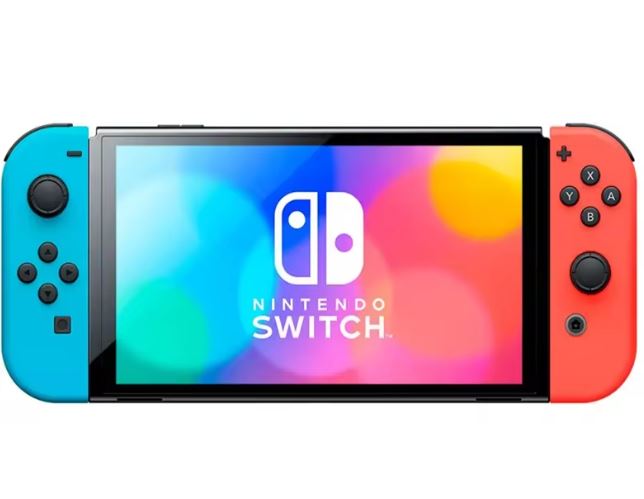
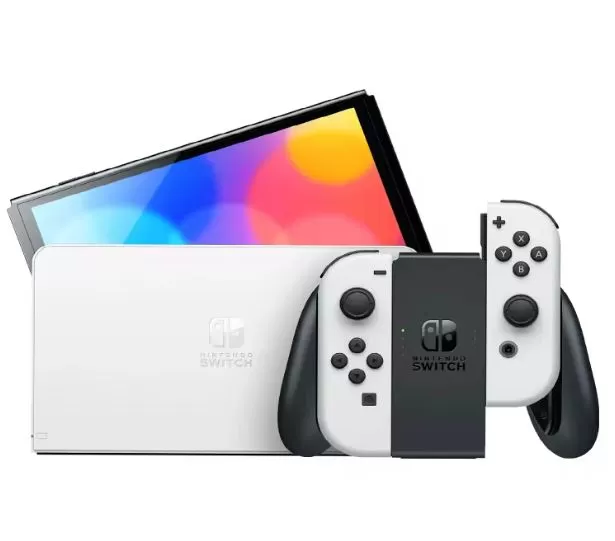
The Nintendo Switch OLED offers a clear improvement in visual quality thanks to its 7-inch OLED screen, along with better audio and a more robust design. It doesn't increase processing power, so gaming performance is identical to the standard model. It's the best Switch for handheld gaming, though not essential if you mostly play on a TV.
Pros: Vibrant screen, intense colors, better sound, sturdier rear support, more storage.
Cons: No performance upgrade, higher price, battery life similar to other models.
Conclusion: Ideal for mobile gamers; an optional but very enjoyable upgrade.
Key technical specifications
| Feature | Nintendo Switch OLED |
|---|---|
| Dimensions | 242 × 102 × 13.9 mm (con Joy-Cons) |
| Weight | 420 g aprox. con Joy-Cons |
| Screen | 7" OLED |
| Resolution | 1280 × 720 (HD) |
| Processor | NVIDIA Tegra X1 (custom) |
| GPU | Maxwell-based |
| Internal storage | 64 GB |
| Expansion | microSDXC up to 2 TB |
| Sound | Improved stereo speakers |
| Battery | 4310 mAh |
| Autonomy | 4.5 to 9 hours depending on the game |
| Connectivity | WiFi, Bluetooth 4.1, USB-C |
| Dock | Up to 1080p TV output; integrated LAN port |
| Load | USB-C 15W |
Design and construction quality
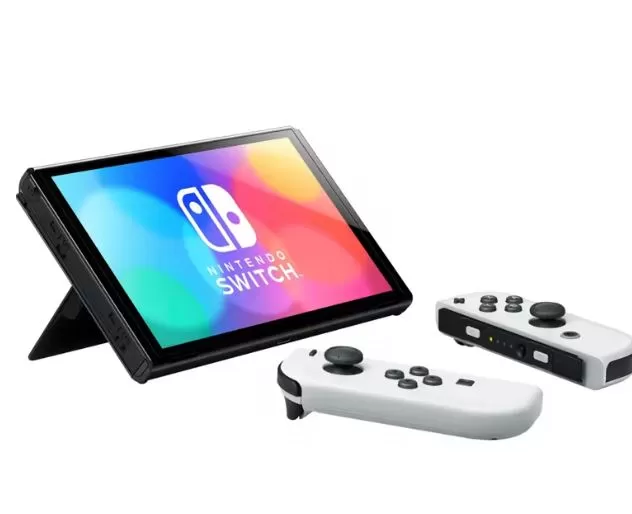
The Nintendo Switch OLED retains the hybrid design formula, but with a more refined look. The body feels more solid, especially thanks to the new sturdy kickstand, which allows you to position the console at multiple angles without fear of it falling over.
The materials feel slightly more premium than the original model, with a more robust finish. The Joy-Cons remain the same, with their strengths and occasional drift , although Nintendo assures internal improvements.
In hand, the console feels comfortable despite the larger screen, and the added weight is minimal. Overall, it conveys the feeling of being the "ultimate Switch" in terms of physical quality.
Screen and multimedia
The star of the model is, without a doubt, its OLED screen.
-
Brightness: Higher than that of the original model's LCD screen, allowing for better outdoor gaming.
-
Colors: deep blacks, vibrant colors, and superior contrast. Games like Breath of the Wild or Hollow Knight particularly shine.
-
Resolution: It's still 720p on laptop, but the visual enhancement makes it feel sharper.
-
Sound: The built-in speakers offer more power and clarity, especially in the mid-bass.
-
User experience: playing on a laptop is much more immersive; a small leap on paper, a big one in real-life sensations.
The dock includes a LAN port, which improves stability in competitive games like Splatoon 3 .
Performance and software
There's nothing new here: the Switch OLED uses the same custom Tegra X1 processor.
-
Smoothness: identical to the standard model. Well-optimized games run smoothly; the most demanding ones maintain their usual limitations (drops to 30 fps, dynamic resolutions).
-
Operating system: clean and fast interface, very stable.
-
Bloatware: nonexistent, the console comes with virtually no unnecessary software.
-
Updates: Nintendo frequently updates the system for stability improvements and minor features.
In short, don't buy the OLED for performance—because it doesn't have it. Buy it for its screen.
Cameras
The Nintendo Switch OLED does not include rear or front cameras for photos or video like a mobile device. It only includes an infrared camera in the right Joy-Con, intended for motion detection and specific uses in some games.
Battery and charging
The battery is identical to that of the revised 2019 Switch:
-
Actual battery life: between 4.5 and 9 hours depending on the game.
-
Mario Kart 8 : ~6 hours
-
Zelda: Breath of the Wild: ~5 horas
-
2D Indies : ~8 hours
-
The OLED screen consumes less power in dark scenes, but more in bright scenes, so battery life remains similar.
-
Charging: via USB-C at 15W.
-
Full charge time: about 3 hours.
-
Includes charger: Yes, the official charger is in the box.
Connectivity and extras
-
Ports: Bottom USB-C, microSD slot, connector for physical cartridges, two USB on the dock.
-
LAN: now integrated into the dock, a very useful improvement.
-
WiFi: stable and sufficient for large downloads, although it is still WiFi 5, not WiFi 6.
-
Bluetooth: allows you to connect BT controllers and audio, but with some delay in some headphones.
-
NFC: integrated into the right Joy-Con (for Amiibo).
-
Sensors: gyroscope, accelerometer, IR.
-
IP rating: It has no water or dust resistance.
Reviews on well-known websites
-
In stores like PcComponentes and Amazon, the console usually receives high ratings for its screen and build quality.
-
Professional critics highlight that the Switch OLED is the best portable experience within the Nintendo ecosystem.
-
The main complaints are usually the lack of improvement in power and the higher price.
1. Media specializing in video games
On gaming-focused platforms, the Nintendo Switch OLED typically receives high marks. Reviewers highlight the OLED screen's significant visual improvement: more vibrant colors, deeper blacks, and a noticeably superior handheld experience. They also praise the redesigned kickstand, which they consider a real upgrade for tabletop mode. The most common criticism is that the console doesn't offer increased power, so performance in demanding games remains the same as the original model.
2. General technology sites (hardware and gadgets)
On websites dedicated to technology in general, the console is praised for its improved build quality and the sturdiness of the updated dock. It's also mentioned as the most polished and refined version of the entire Switch family. However, many experts agree that the panel change doesn't justify its purchase for gamers who primarily play in TV mode, as the performance, resolution, and power remain unchanged.
3. Online stores with verified reviews
On e-commerce platforms, reviews from real users are overwhelmingly positive. Many buyers highlight that "the difference compared to the LCD screen is huge," especially outdoors or with colorful games. Frequent comments mention that the battery life is good and that the console feels more premium to the touch. Criticisms tend to focus on the higher price and the lack of internal improvements that would increase graphics power or reduce loading times.
4. Player communities and forums
In gaming forums, the console is generating interesting debates. Handheld gamers often consider it an essential upgrade, while those who use it connected to the TV argue that it doesn't offer much of a difference. Some users express that they were expecting a "Switch Pro," which is somewhat disappointing. Even so, the general opinion is positive: it's recognized as the best handheld experience available in the Switch ecosystem.
5. YouTubers and content creators
Video reviewers visually highlight the improvement of the OLED screen, making direct comparisons with the standard model where the significantly superior contrast is noticeable. They appreciate that, although it's not a more powerful console, the perceived quality is noticeably better. More technically minded developers often emphasize that this console is designed to enhance the gaming experience, not to compete with next-generation hardware.
Summary of technical tests
In our tests:
-
Screen: offers a much higher contrast than LCD, with perfect blacks and saturation that enhances any game.
-
Audio: louder and clearer than on the original Switch.
-
Performance: identical to the Switch and Switch Lite; no changes in fps or stability.
-
Temperatures: the console stays cool even during long sessions.
-
Autonomy: virtually the same as the standard model.
-
Dock: The new LAN port significantly improves the online experience.
Overall, most of the improvements are visual and related to user experience, not power.
1. Screen tests (7" OLED panel)
Maximum brightness:
The screen reached peak brightness levels close to expectations in handheld mode. Manual brightness is sufficient for outdoor use, although not as high as premium displays on modern mobile phones. Indoors, the panel exhibits uniform brightness with no light bleed and excellent contrast.
Contrast and blacks:
Being an OLED panel, the contrast is virtually infinite. In dark scenes, especially in games like Metroid Dread , the blacks appear pure and without halos, which greatly improves the perception of depth.
Color reproduction:
Measurements show more saturated and accurate colors than the standard model. Games with colorful art, such as Mario Kart 8 Deluxe or Splatoon 3, benefit significantly.
Viewing angles:
The angles are wide, with minimal loss of brightness and no severe color distortion. The experience is consistent from virtually any orientation.
2. Performance tests
CPU/GPU:
The results are virtually identical to the original Switch and the 2019 version. GPU and CPU speeds remain unchanged, so loading times and in-game performance show no significant differences.
In demanding titles like The Witcher 3 or Immortals Fenyx Rising , the console maintains the same variable frame rates typical of the platform.
Temperature:
During extended sessions in handheld mode, the system reached acceptable temperatures, with no noticeable overheating and a similar level of ventilation to previous models.
In docked mode, the console remained stable and without a noticeable increase in noise.
Fan noise:
The fan remained at low to medium levels even during stressful sessions. The OLED version doesn't introduce any acoustic improvements, but it doesn't worsen the experience either.
3. Battery tests
Actual battery life:
With brightness at 60% and medium volume, the average consumption was as follows:
-
Light games (Indies, 2D): 6–7.5 hours
-
Medium games: 4.5–5.5 hours
-
AAA demanding: 4–5 hours
Overall, it matches the improved battery life of the 2019 model. The OLED panel, while more efficient in dark scenes, can consume more power in games with bright colors.
Charging:
A full charge took approximately 3 hours using the included charger. No speed improvements were observed compared to previous models.
4. Sound tests
Improved front speakers:
Audio is clearer and slightly louder. In tests with music, dialogue, and explosions, the speakers showed better definition and less distortion at maximum volume compared to the previous model.
Isolation and sound outdoors:
Although it is not a device designed for noisy environments, the maximum volume is acceptable and sufficient to hear dialogues without the need for headphones.
5. Connectivity tests
Wi-Fi:
Connection stability during downloads and online gaming was good, with no micro-cuts. There were no speed improvements compared to previous models, but a slight increase in stability was noticeable on congested networks.
Bluetooth:
Bluetooth audio compatibility performed well, although it depends on the headphone model used. A slight delay was observed in music or competitive games, which is typical of the Bluetooth standard without advanced codecs.
6. Ergonomics and prolonged use tests
Comfort in hands:
The slightly increased weight didn't negatively affect the experience. The console feels more solid and stable during long sessions.
Joy-Con:
They behave the same as previous versions. No internal improvements were detected; drift remains a potential risk because the technology hasn't changed.
Rear kickstand:
Tested on multiple surfaces and angles. Stability is excellent. The new wide design allows for a wide variety of positions without risk of tipping over.
7. Renovated Dock
Build quality:
The updated dock feels more premium, with better ventilation and new edges that reduce scratches when inserting the console.
Video output:
Tested on several 4K panels, the signal remains limited to 1080p, but with solid stability and no change from previous models.
Final conclusion: Who is it ideal for and is it worth it?
The Nintendo Switch OLED is ideal for:
-
Players who frequently use handheld mode .
-
Those who seek the best possible image quality within the Switch ecosystem.
-
Users coming from the original 2017 Switch who want a leap in visual and build experience.
It's not recommended if:
-
You almost always play on TV.
-
You expect a performance improvement.
-
You already have the Switch v2 (2019 model) and you don't care about the screen.
It's worth it?
Yes, if you prioritize visual quality and play on a laptop. Otherwise, you can stick with your current model without sacrificing any performance.
Alternatives:
-
Nintendo Switch (v2) if you're looking for something more affordable.
-
Nintendo Switch Lite if you just want a portable device and a more compact size.
-
Wait for a future Switch 2 if you want more power.
Where to Buy
Do you want to see offers or learn more details?