Close your eyes for a second. Imagine the smell of a CRT television warming up, the sound of a PS2 loading screen, or the glow of a Game Boy Advance under the covers at midnight.
The 2000s were an extraordinary decade for gaming, the era that gave us open worlds, online multiplayer, and unforgettable franchises that still define pop culture today.
If you were a kid or teenager between 2000 and 2009, at least half of these games lived in your living room.
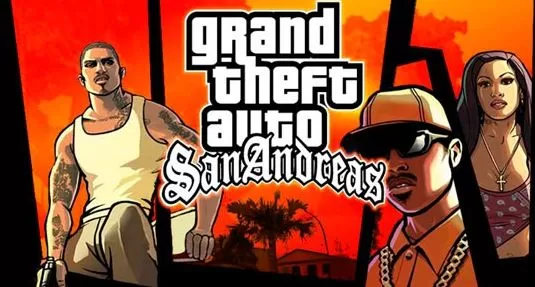
1. Grand Theft Auto: San Andreas (2004)
Developer: Rockstar Games | Platforms: PS2, Xbox, PC
There are games, and then there is GTA: San Andreas. Released in October 2004, San Andreas wasn't just a video game — it was a full-scale cultural event. Rockstar built an entire fictional state spanning three cities, with mountains, deserts, countryside, and urban streets packed with life. You played as CJ, navigating gang warfare, corruption, and a story that felt genuinely cinematic at a time when most games were still linear corridor experiences.
Its impact reached well beyond living rooms. In countries like Mexico and Thailand, kids would crowd around rental PS2s just to watch strangers play it. The "Hot Coffee" controversy got politicians involved. Its soundtrack — spanning hip-hop, rock, country, and funk — introduced millions of players to artists they'd never heard. Nearly 10 million copies sold in the US alone by 2009. Two decades on, it remains one of the most beloved games ever made.
🎮 Relive it on a retro setup: Retro Gaming Console
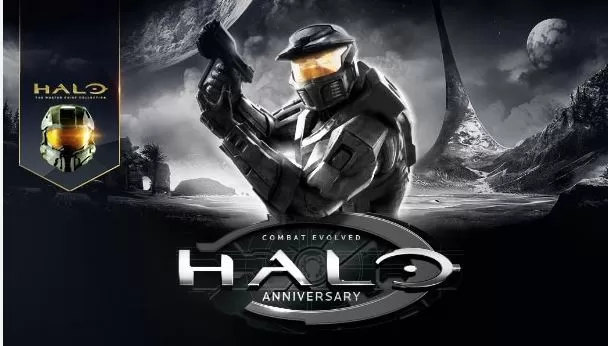
2. Halo: Combat Evolved (2001)
Developer: Bungie | Platforms: Xbox, PC, Mac
On November 15, 2001, Halo launched alongside the original Xbox and single-handedly justified Microsoft's entry into the console market. Before Halo, first-person shooters on consoles were considered inferior to their PC counterparts. Halo changed that argument forever. Its dual-stick controls, regenerating shields, and brilliant campaign — with the mysterious Covenant and the terrifying Flood — set a new standard for console gaming.
The multiplayer component became a social institution. LAN parties built around Halo were a defining 2000s experience, with four Xboxes daisy-chained together in a basement feeding a room full of screaming teenagers. Sequels Halo 2 and Halo 3 only amplified the phenomenon, but it was Combat Evolved that started the revolution. Master Chief became one of gaming's most iconic characters — so iconic he even appeared in Fortnite decades later.
🎮 Play it on a great display: Gaming Monitor
3. The Sims (2000)
Developer: Maxis / EA | Platforms: PC
When The Sims launched in February 2000, nobody was sure if a game about doing chores and using the toilet would sell. It sold millions. By 2002, it had become the best-selling PC game in history, outselling every title that came before it. The concept was deceptively simple: build a house, create a character, and simulate their life. The reality was endlessly creative — players used it to tell stories, design dream homes, or simply drown their Sims in swimming pools by removing the ladder.
The Sims was especially groundbreaking because it attracted massive audiences outside the traditional gaming demographic — particularly girls and women who had been largely ignored by the industry. It spawned an empire of expansions, sequels (Sims 2, 3, 4), and a fanbase that still thrives today. If you had a PC in the 2000s, The Sims was almost certainly installed on it.
🎮 Game comfortably for hours: Gaming Chair

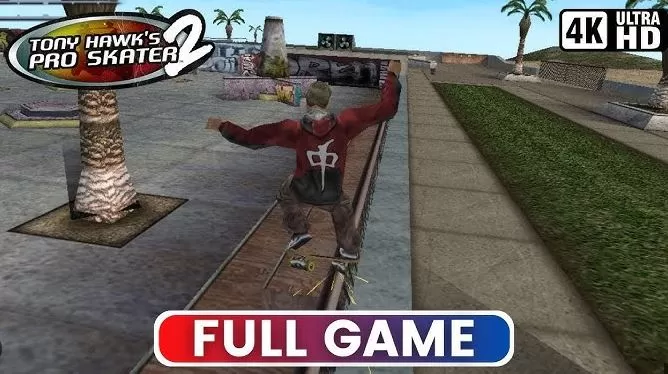
4. Tony Hawk's Pro Skater 2 (2000)
Developer: Neversoft | Platforms: PS1, N64, PC, Dreamcast, GBA
Tony Hawk's Pro Skater 2 was the best-selling game of the entire year 2000, moving over 1.5 million copies. It introduced a generation to skateboarding culture, combining tight controls, a career mode, and an absolutely legendary soundtrack (Rage Against the Machine, Dead Kennedys, Naughty by Nature) that still gets nostalgic gasps today. The combo system felt revolutionary — stringing together tricks across massive warehouse levels gave a genuine sense of flow and skill progression.
THPS2 also popularized the concept of completing specific objectives within a level — collect SKATE letters, smash specific objects, hit a score threshold — creating an addictive loop that kept kids playing for hours. The series dominated gaming culture well into the mid-2000s, and the 2020 remaster proved that this formula is genuinely timeless.
🎮 Skate-inspired gaming gear: Gaming Headset
5. Call of Duty 4: Modern Warfare (2007)
Developer: Infinity Ward | Platforms: Xbox 360, PS3, PC
If the original Call of Duty games were acclaimed, Modern Warfare was a detonation. Shifting from World War II to a fictional contemporary conflict, CoD4 brought a cinematic campaign that felt like playing an action blockbuster, and a multiplayer system so addictive it defined a generation of online gaming. The unlock progression system — earning new weapons, perks, and killstreaks by leveling up — was revolutionary and has been copied by virtually every multiplayer game since.
Modern Warfare sold over 7.4 million copies in the US alone during the 2000s. Matches on maps like Crash, Vacant, and Shipment became a daily ritual for millions of teens after school. The "prestige" system — resetting your rank to start over as a badge of honor — invented a psychological hook that the gaming industry still exploits today.
🎮 Dominate with a pro controller: Pro Gaming Controller
6. Guitar Hero III: Legends of Rock (2007)
Developer: Neversoft | Platforms: Multi-platform (Wii, PS2, PS3, Xbox 360, PC)
Guitar Hero III is the highest-revenue video game of the entire 2000s decade in the United States — a staggering achievement for a game that came with a plastic guitar controller. The rhythm-game genre it helped define was genuinely unique: standing in your living room, shredding to "Through the Fire and Flames" by DragonForce on Expert mode, in front of a crowd of friends, was a social experience no other game of the era could replicate.
Guitar Hero and its close rival Rock Band (2007) turned music performance into a party game format, selling millions of plastic instruments worldwide and introducing teenagers to classic rock, metal, and punk they might never have discovered otherwise. The peripheral-based music game craze defined the late 2000s gaming landscape and remains one of the decade's most distinctive cultural artifacts.
🎮 Set up the perfect party gaming space: Gaming accessories
7. Pokémon Ruby & Sapphire (2003)
Developer: Game Freak | Platforms: Game Boy Advance
The Pokémon franchise was already a phenomenon coming out of the 1990s, but Ruby & Sapphire — the third generation — kept millions of kids glued to their Game Boy Advances throughout the early 2000s. Set in the tropical Hoenn region, they introduced 135 new Pokémon, double battles, contests, and secret bases. The school yard trading culture — gathering around a link cable to swap Pokémon before class — was a defining social ritual of the era.
The GBA era also gave us FireRed & LeafGreen (2004) and Emerald (2005), ensuring that Pokémon dominated portable gaming for the entire decade. For many 2000s kids, their first experience of genuine completionism — filling the entire Pokédex — came from these games. The Pokémon Company reported over 200 million games sold by the end of the decade.
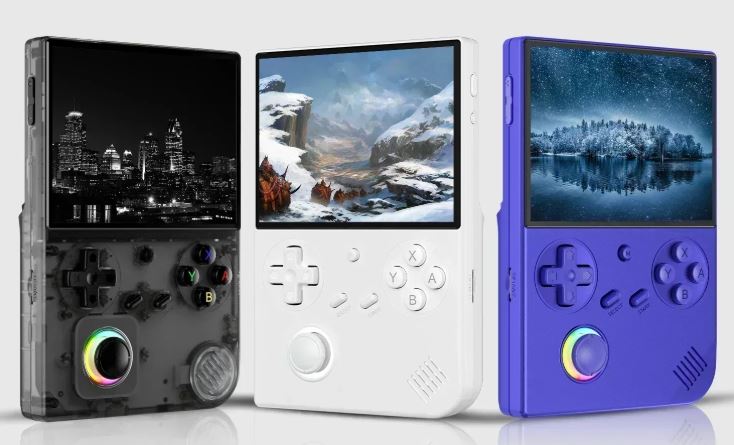
🎮 Play GBA classics on the go: Retro Handheld Console
8. Wii Sports (2006)
Developer: Nintendo | Platforms: Wii
Wii Sports is the best-selling game of the entire 2000s decade in the United States, with over 27 million units sold. It achieved that record by doing something no game had done before: it brought gaming to people who had never picked up a controller. Grandparents playing tennis. Parents bowling with their kids. Families boxing in the living room. The Wii remote made the physical act of playing feel intuitive and instantly accessible.
Nintendo's gamble on motion controls paid off spectacularly. The Wii console itself sold over 100 million units worldwide, and Wii Sports was the Trojan horse that made it happen. For millions of households, it was the first gaming experience the entire family shared together — and it permanently changed how the industry thought about audience and accessibility.
9. RuneScape (2001)
Developer: Jagex | Platforms: PC (Browser)
RuneScape was the internet's first great MMORPG accessible to everyone — no expensive disc, no powerful PC required, just a browser and a free account. Set in the fantasy world of Gielinor, it let players mine ore, cast spells, battle monsters, and trade items in a persistent online world. For 2000s kids who didn't have gaming consoles, RuneScape was gaming. Millions spent hours grinding skills, attempting quests, and navigating the treacherous Wilderness (where other players could kill you and steal your items).
No sleepover was complete without someone booting up RuneScape. The game's free-to-play model made it universally accessible, and its social elements — trading, teaming up, chatting in crowded town squares — prefigured the social gaming culture that would later define platforms like Roblox and Fortnite. RuneScape still has an active playerbase in 2026, making it one of the longest-running online games in history.
10. Need for Speed: Most Wanted (2005)
Developer: EA Black Box | Platforms: PS2, Xbox, Xbox 360, PC, GBA
Need for Speed: Most Wanted was the racing game of the 2000s generation. You played as a street racer trying to climb the Blacklist — a crew of 15 elite illegal racers — while evading increasingly aggressive police pursuits. The open-world design of Rockport city, combined with a genuinely cinematic story told through live-action cutscenes, made it feel like living inside a Fast & Furious movie.
The police chases were legendary. Earning a six-star pursuit rating, with helicopters, roadblocks, and spike strips deployed against you, triggered a rush no other racing game had delivered. Most Wanted sold millions worldwide and remained a fan favorite long after more technically advanced racers had arrived. Its 2012 reboot confirmed the original's iconic status — nothing quite matched the first time.
Honorable Mentions
The 2000s were so rich in great games that dozens of titles deserve recognition beyond the top 10:
-
Spider-Man 2 (2004) — The gold standard of licensed superhero games; web-swinging felt genuinely free
-
Mario Kart: Double Dash (2003) — The chaotic two-rider system made it the ultimate GameCube party game
-
Counter-Strike (2000) — Defined competitive PC gaming and team-based online shooters for a decade
-
Resident Evil 4 (2005) — Revolutionized third-person action and horror simultaneously
-
World of Warcraft (2004) — The MMORPG that consumed thousands of hours from millions of subscribers
-
The Simpsons: Hit & Run (2003) — The GTA-style Simpsons game that sold over 1 million copies in the UK alone
-
Flash Games (2000–2009) — Club Penguin, Neopets, Miniclip titles — the first games millions played online
Why the 2000s Were Gaming's Golden Era
The 2000s were a perfect storm for gaming. Hardware leaped forward dramatically — from the PlayStation 2's DVD capabilities to the Xbox 360's HD graphics. The internet went from a novelty to a necessity, and online multiplayer transformed games from solitary experiences into social ones. Developers were bold, experimental, and willing to take risks on entirely new genres and concepts.
Most importantly, gaming shed its niche label during this decade. By 2009, video games had become the dominant entertainment medium for young people worldwide. The kids who grew up with these titles are now adults in their 30s — and the nostalgia they feel for this era is as powerful as any generation's longing for the music or movies of their youth. These weren't just games. They were childhood.